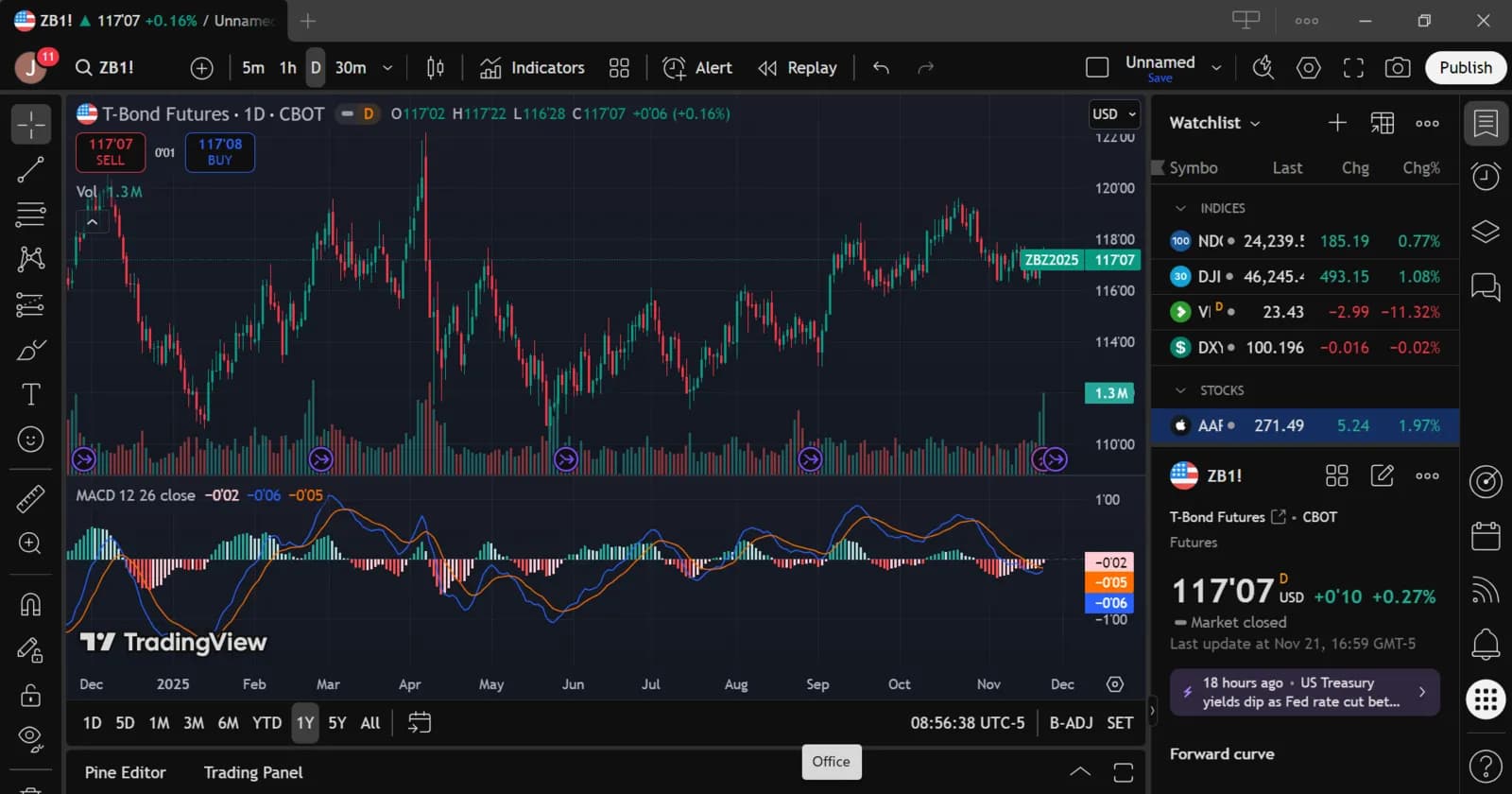


Price tells you what the market did. Sentiment tells you how the market feels about what it did — and, quite often, what it is about to do on impulse. The Fear & Greed index is the most popular attempt to turn that emotional temperature into a number from 0 to 100. Like every measure of collective emotion, it is valuable and dangerous for the same reasons: simple to read, easy to use wrong.
This article does three things: it explains what the index actually measures, argues why sentiment extremes should be treated as context — never as an entry trigger — and shows how TraderClub.ai's risk-review uses extreme sentiment to demand caution instead of courage.
What the index really measures
There are several versions of Fear & Greed — CNN's original for US equities, Alternative.me's for crypto — but the logic is the same: aggregating objective components of market behavior into a single thermometer. Among the typical ingredients:
- Momentum and breadth: how far price has stretched from its averages and how many assets participate in the move.
- Volatility: volatility spikes tend to accompany fear; prolonged compression usually accompanies complacency.
- Demand for protection: the ratio between put and call options reveals how much the market is paying for insurance.
- Volume and dominance: in crypto, Bitcoin's share and relative volume enter as a risk-appetite signal.
- Surveys and social media: in some versions, retail euphoria or panic feeds directly into the calculation.
The result runs from 0 (extreme fear) to 100 (extreme greed). Notice what that means: the index does not measure what the market is worth — it measures what the crowd feels. Those are different things, and the usefulness lives precisely in that difference.
| Range | Label | Reading as context |
|---|---|---|
| 0–24 | Extreme fear | Panic installed; forced liquidations possible; exaggerated moves in both directions |
| 25–44 | Fear | Dominant pessimism; rallies tend to get sold quickly |
| 45–55 | Neutral | No relevant emotional asymmetry; technicals rule on their own |
| 56–75 | Greed | Growing optimism; dips get bought in a hurry |
| 76–100 | Extreme greed | Euphoria; leverage crowded; market fragile to any disappointment |
The mistake of using an extreme as a trigger
The naive reading of the index is seductive: extreme fear, buy; extreme greed, sell. The problem is that extreme sentiment has no expiration date. Panicking markets can panic harder; euphorias can get more euphoric — for weeks. Whoever buys just because the needle hit 15 is trying to catch a falling knife with the argument that 'everyone is already scared'. Sometimes it works. When it does not, the loss arrives fast and deep.
There is an important asymmetry hidden here: the index is reasonable as a description of the present and weak as a prediction of the immediate future. It tells you which climate you are trading in — it does not tell you when the climate turns. That is why the correct use is conditional: sentiment adjusts how you trade the signal you already have; it does not create a signal out of thin air.
Be fearful when others are greedy, and greedy when others are fearful.
The most quoted line in value investing is often used as a license to fade any extreme. Worth remembering the context: Buffett talks about years and about business value, not intraday leverage. In the short term, fading the crowd without technical structure on your side is not contrarian courage — it is just haste with a narrative.
Extremes as context: the use that works
Treating sentiment as context means letting it modulate three decisions you already make: how much to risk, what to demand from the setup, and what to expect from the move.
- Position size: at extremes, realized volatility tends to rise. The same stop in points is worth more money — cut your size before the market cuts it for you.
- Setup requirements: in extreme greed, a bullish breakout needs more evidence, not less — a good share of future demand has already been front-run.
- Behavior expectations: in extreme fear, technical supports fail more often (liquidations do not read charts); targets against the panic should be shorter.
- Attention asymmetry: extremes are the moment to review your total portfolio exposure, not to hunt for the heroic trade.
There is also a more refined reading that experienced operators value: the divergence between price and sentiment. When price prints a new high and the index no longer follows — euphoria cools while the chart is still climbing — the move's emotional fuel is running out before the move itself. The inverse holds too: bottoms where price keeps making new lows but panic stops growing suggest seller exhaustion. Neither divergence is an entry trigger on its own; they are warnings that the regime may be shifting and that the next technical signal deserves double attention — in both directions.
One-sentence summary: extreme sentiment changes how much you should trust your setup and how much you should risk on it — it does not change whether the setup exists. Context adjusts; triggers decide. The index is context.
Get the next ones
One article a week, straight to your inbox. No spam.
How TraderClub's risk-review uses sentiment
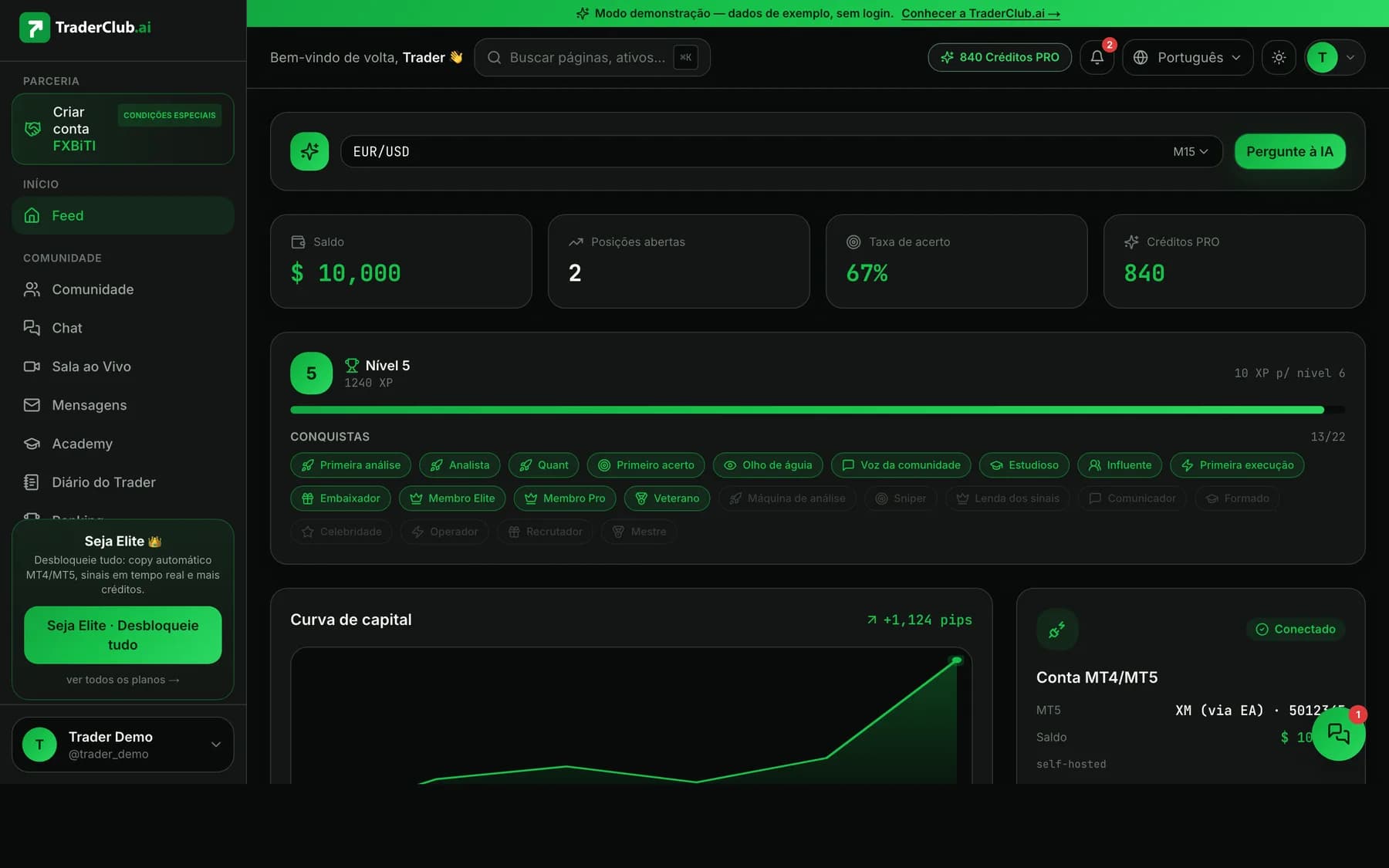
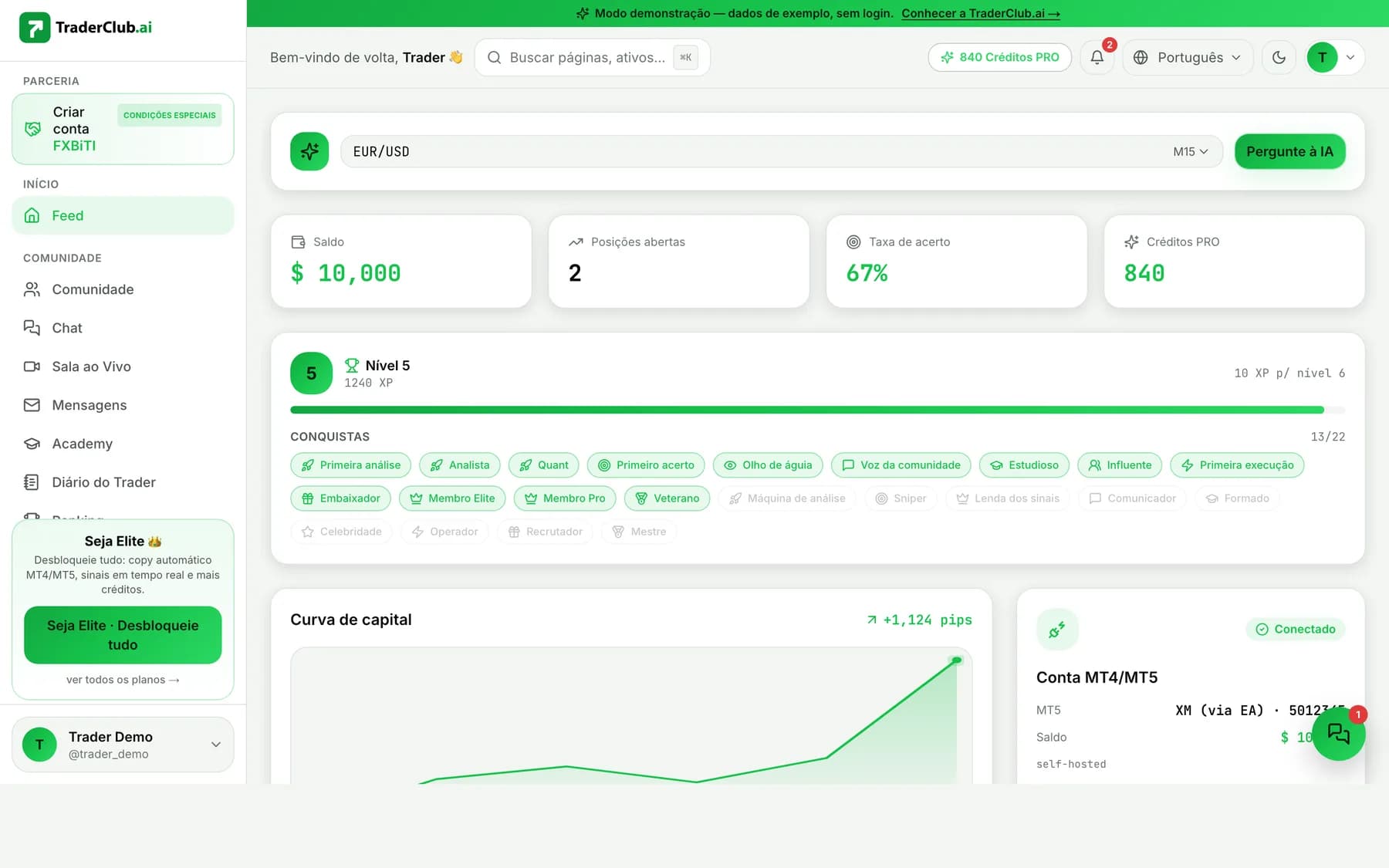
At TraderClub.ai, sentiment enters at the risk layer — not the signal layer. The distinction is deliberate. The technical engine generates opportunities through the confluence of EMA, RSI, MACD and ADX, with multi-timeframe confirmation against the H1. Only then does the analysis pass through the AI risk-review (Claude), which evaluates the context indicators cannot see: macro event windows and the market's emotional temperature.
When sentiment sits in an extreme zone — panic or euphoria — the risk-review demands caution: it downgrades the signal's confidence, flags the adverse context in the published rationale or, combined with macro event windows (rate decisions, payrolls), vetoes publication entirely. The principle is the same one we defend for the human trader: an emotional extreme is the time to demand more from the setup, not to loosen up.
- Extreme sentiment never generates a signal on its own — at most, it blocks or weakens one.
- In euphoria, bullish continuation signals get extra scrutiny: how much of the move is already anticipation?
- In panic, the risk-review assumes technical levels are worth less and adjusts the risk reading accordingly.
- Every veto and every downgrade follows the same yardstick as the signals: the public track record, resolved against real candles and registered in a hash-chained ledger.
There is an operational detail that matters: execution at TraderClub is zero-custody, via an EA on the user's own MT5. That means the final decision is always yours — the system informs, calibrates confidence and demands caution, but it does not trade your capital on its own. The sentiment layer exists so that decision gets made with the market's climate on the table, not in the dark.
A practical protocol for extreme days
If the index wakes up in an extreme zone, a simple protocol avoids the two classic traps — contrarian heroics and surrender to panic:
- Write down the regime before the session: extreme fear or extreme greed? That becomes the day's filter.
- Cut your standard position size while the extreme lasts — volatility pays the difference.
- Only accept signals with full confluence; discard the marginal ones without mercy.
- Shorter targets against the extreme's direction; honest stops, defined before entry.
- If no setup survives the filter, the protocol has decided for you: a no-trade day is also a result.
Log the Fear & Greed reading in your trade journal at the moment of every trade. After a few dozen trades you will know — from your own data — in which sentiment regimes your method earns and in which it bleeds. That is the only calibration that matters.
A hostage is whoever obeys without criteria
Becoming sentiment's hostage takes two forms, and both are obedience: buying every panic on contrarian reflex, or stopping trading every time the needle changes color. The mature use is different — the index as a context layer that modulates risk, requirements and expectations, while decisions keep being born from the method. That is how the risk-review treats sentiment, and that is how it pays off for the trader: not as an oracle, but as the thermometer hanging on the decision room's wall.
Want to trade with a risk layer that reads the market's climate before every signal? Create your account and see the risk-review in action.
Risk warning: trading leveraged instruments involves a high level of risk and can result in the loss of your invested capital. Sentiment indices, indicators and AI are context tools and do not eliminate risk or guarantee results. This content is educational and does not constitute investment advice. Only trade with capital you can afford to lose.