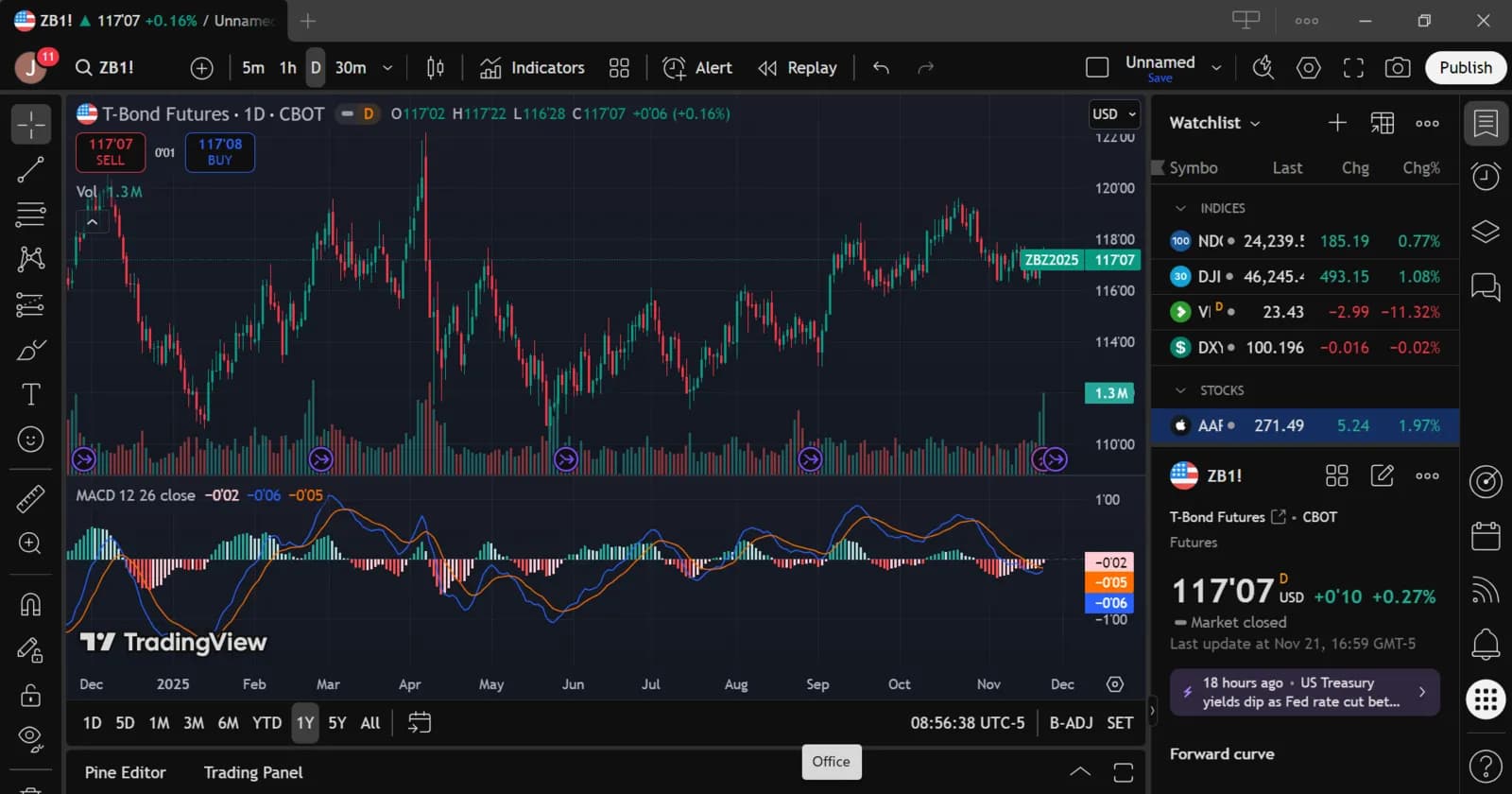


Every trader has lived this scene: the M15 setup was flawless. Clean breakout, strong candle, indicator confirming. Entry executed — and twenty minutes later the market steamrolls the position as if the setup had never existed. What happened? Most of the time, nothing mystical: the 15-minute chart was telling one story, and the 1-hour chart was telling another. And when two timeframes disagree, the bigger one usually wins.
Multi-timeframe analysis is the antidote to that kind of ambush. The idea is simple to state and hard to practice: no timeframe should be interpreted on its own. The signal is born on the short timeframe, but the permission to trade it comes from the long one.
It is the same market; only the lenses change
A common conceptual mistake is treating M15, H1 and D1 as if they were different markets. They are not. It is the same order flow seen at different zoom levels. The D1 compresses weeks of battle into a few candles and reveals the dominant regime. The H1 shows the session's current. The M15 shows the fine texture — the small advances and retreats through which that current materializes.
By construction, the short timeframe carries far more noise. A move that looks like a dramatic reversal on the M15 can be, on the H1, just a routine pullback into the moving average — indistinguishable from dozens of others the trend has already produced and absorbed. Whoever looks only through the magnifying glass confuses texture with structure.
The trend is your friend except at the end where it bends.
The metaphor of the tide, the waves and the ripples
The oldest image in technical analysis is still the best one. Robert Rhea, systematizing Dow Theory in the 1930s, compared market movements to the sea: the tide (primary trend), the waves (intermediate corrections) and the ripples (day-to-day fluctuations). The D1 is the tide. The H1 is the wave. The M15 is the ripple.
Swimming ripple by ripple against the tide is technically possible — and statistically exhausting. Every win pays little, because the backdrop compresses the move in your favor; every loss costs dearly, because the backdrop amplifies the move against you. The trader who buys M15 bottoms inside an H1 downtrend is betting, over and over, that the exception will beat the rule.
Classic rule of thumb: the higher timeframe defines WHAT to do (buy, sell or nothing); the lower timeframe defines WHEN to do it. Swapping those roles is the recipe for the beautiful signal that goes wrong.
The classic mistake: fighting the tide
Why is this mistake so universal? Because the short timeframe is seductive. It offers more signals per day, faster feedback, and a feeling of control. It also offers an illusion of precision: on the M15, every support looks exact, every breakout looks decisive. The trader sees a double bottom on the M15 and feels they found a reversal — without noticing that, on the H1, it is merely the technical pause of a bearish leg with strength to spare.
The cost of that bias shows up in three layers:
- Target asymmetry: trading against the higher timeframe shortens the trade's natural target — the move in your favor quickly runs into opposing structure.
- Stop asymmetry: the same backdrop that caps the profit accelerates the loss when the larger trend resumes.
- A win rate inflated on the wrong side: counter-trend trades do win often (ripples reverse all the time), but the few losses are disproportionately large. It is the result profile that erodes accounts slowly, then all at once.
How to structure a multi-timeframe read
There is no sacred combination of timeframes, but there is a ratio that works: each layer of analysis should sit between 4 and 6 times the timeframe below it. That spacing is what makes each lens add information instead of repeating the previous one. A practical division of roles:
| Timeframe | Role in the read | Question it answers |
|---|---|---|
| D1 | Context — the tide | What is the dominant regime? Trend, range or transition? |
| H1 | Direction — the wave | Does the session's current confirm or contradict the D1 regime? |
| M15 | Timing — the ripple | Where is the entry point with the best risk-reward? |
| M5 and below | Refinement (optional) | How to tighten the stop without changing the trade's thesis? |
The reading order matters as much as the timeframes: always top-down. Whoever starts with the M15 arrives at the H1 already looking for confirmation of an opinion they have formed — and finds it, because a biased eye always does. Whoever starts with the D1 arrives at the M15 with a single mission: finding the trigger for something already decided at a higher instance.
Get the next ones
One article a week, straight to your inbox. No spam.
How the TraderClub engine confirms against the H1
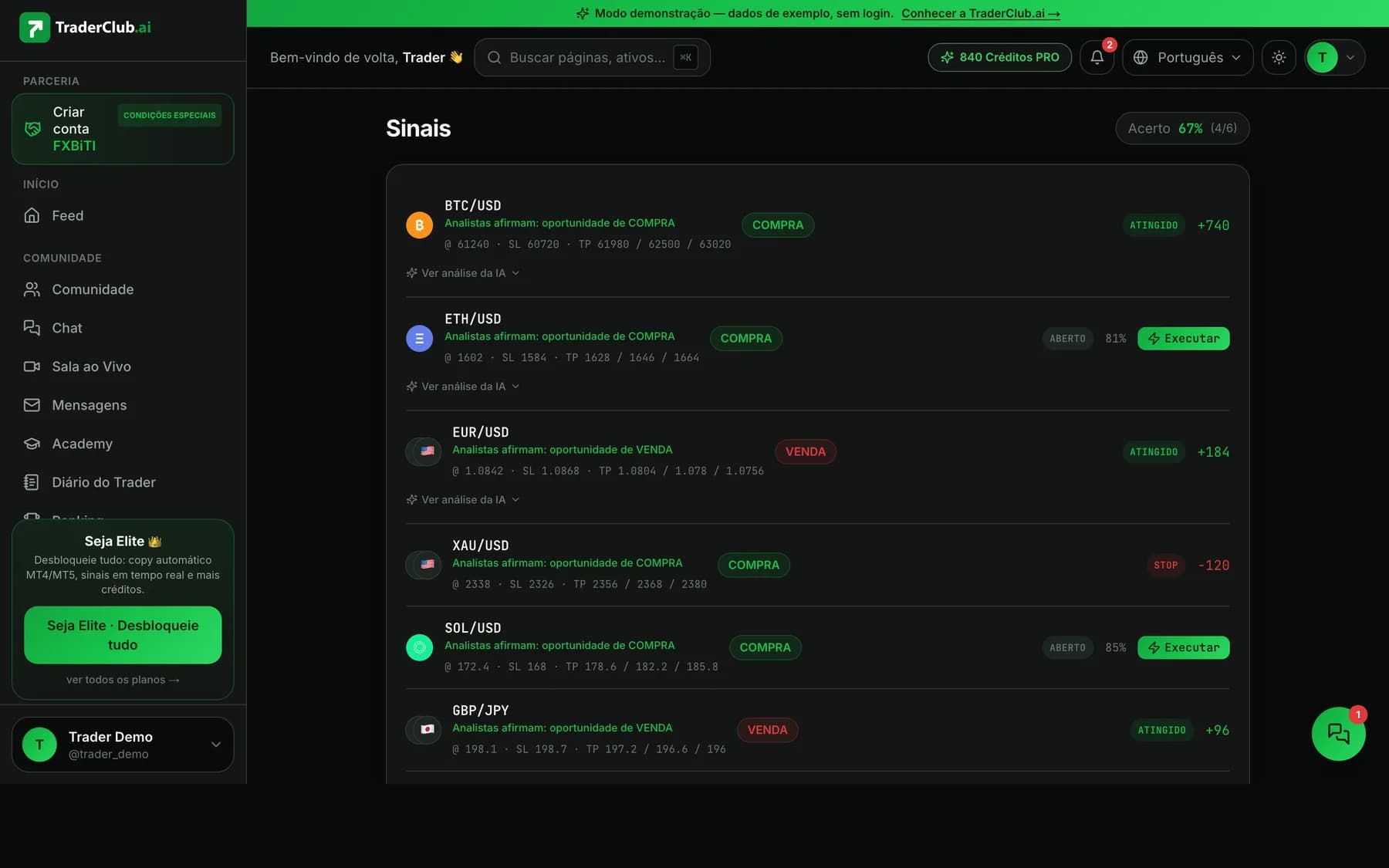
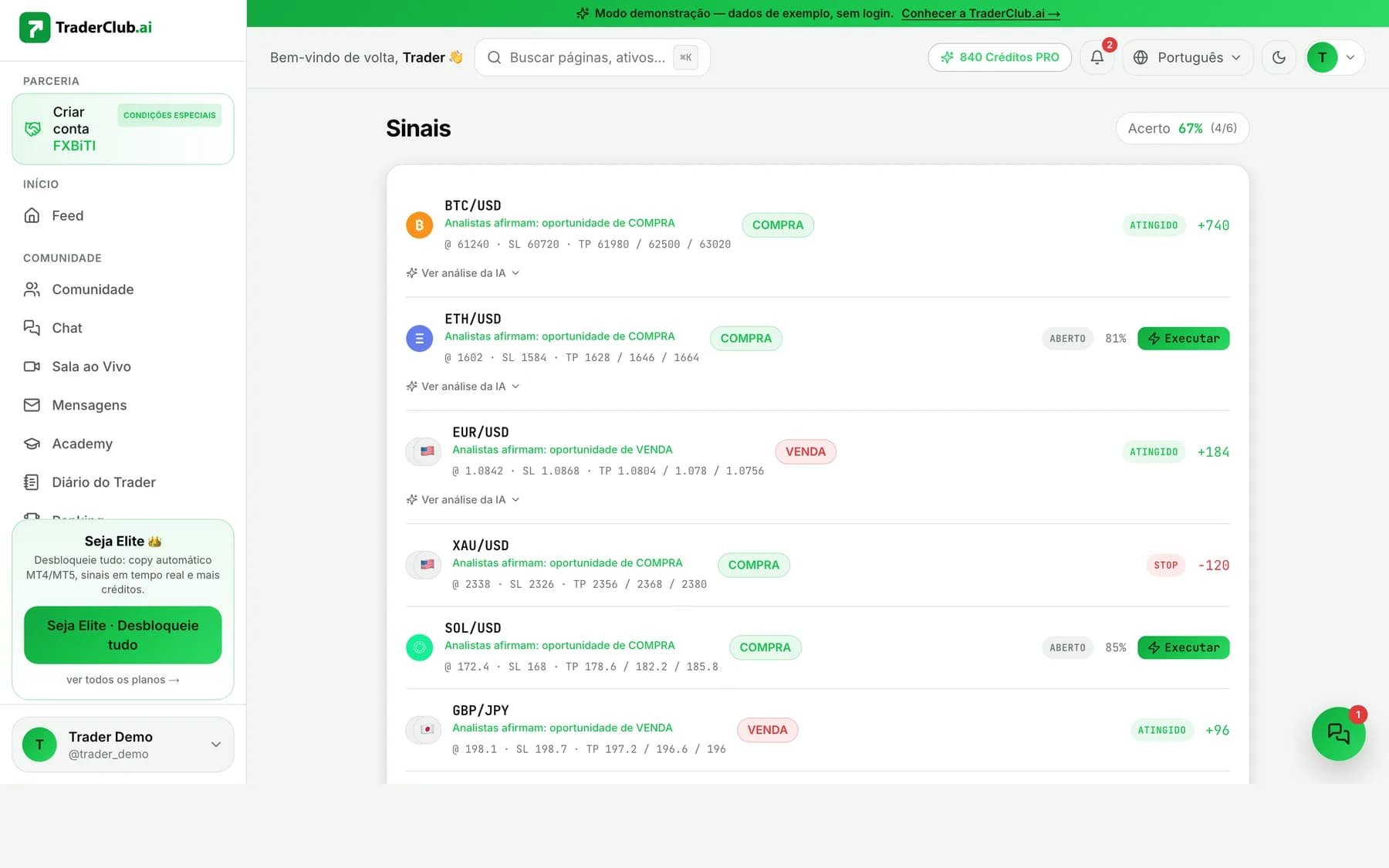
That hierarchy is not decorative advice at TraderClub.ai — it is architecture. The analysis engine evaluates each opportunity through the confluence of EMA, RSI, MACD and ADX, but no signal detected on the operating timeframe gets published without passing multi-timeframe confirmation: the H1 structure must support the proposed direction, with the D1 as the regime backdrop.
In practice, that means a short-timeframe buy setup against a bearish H1 does not become a full-confidence signal — it is either downgraded or discarded. And technical confirmation is still not the last word: there is an AI risk-veto layer (Claude) that can hold back technically valid signals during macro event windows, when chart structure counts for little against a rate decision or a payrolls release.
- A signal is born from indicator confluence on the operating timeframe — never from a single indicator.
- Confirmation against the H1: the proposed direction needs the higher timeframe's structure in its favor; the D1 contextualizes the regime.
- Disagreement between timeframes downgrades the signal's confidence or eliminates it before publication.
- AI risk veto in macro event windows, even with the technicals aligned.
- Every published signal enters the public track record, resolved automatically against real candles and registered in a hash-chained ledger.
The track record point deserves emphasis: multi-timeframe discipline is not a marketing claim, it is a verifiable policy. Every signal the engine publishes is exposed to its real outcome, auditable by anyone — including the ones that did not work out.
A concrete example, step by step
Picture GBP/USD on an ordinary Wednesday. On the D1, the pair has been working above the long moving averages for weeks: buyer's regime. On the H1, a three-day correction has just found support in the trend's value area, and the H1 MACD starts to turn up. On the M15, a higher low forms, followed by the break of a line of descending highs — the trigger.
Notice what each timeframe contributed: the D1 said 'only longs are interesting'; the H1 said 'the correction looks mature'; the M15 said 'here is the entry point with a defined stop'. Now invert the scenario: the same M15 trigger, identical in every detail, but with the H1 in a firm downtrend. The local pattern is the same — the probability is not. That difference, invisible on the entry chart, is exactly what cross-timeframe confluence captures.
A 30-second checklist before any entry: (1) What does the D1 allow? (2) Does the H1 agree with my signal's direction? (3) Is my M15 the trigger of something bigger, or an isolated bet against the current? If you stall on question 2, the answer is: do not trade.
When the short timeframe is allowed to disagree
There is one legitimate use of a signal against the higher timeframe: early detection of reversals. Every trend change begins, by definition, as a 'fight with the tide' on the short timeframe. But note the different treatment this demands: the reversal trader knows they are against the dominant structure, sizes the position smaller, requires accumulated evidence (divergences, a structure break on the H1 itself, absorption in volume) and accepts a lower win rate in exchange for larger asymmetry.
The problem was never consciously trading against the tide — it is trading against the tide without knowing it exists. The first is a strategy with its own rules; the second is the classic mistake dressed up as a pretty setup.
The H1's blessing is about humility
At its core, multi-timeframe analysis institutionalizes a form of humility: the admission that your entry chart does not see the whole picture. Requiring the H1's blessing before acting on the M15 is accepting that timing without context is just haste. The best signals are boring in that sense — three timeframes telling the same story, with no heroics against the current.
Want to see this policy in numbers? Every engine signal — confirmed against the H1 and resolved against real candles — lives in our public track record.
Risk warning: trading leveraged instruments involves a high level of risk and can result in the loss of your invested capital. Cross-timeframe confluence improves the decision process, but no methodology, indicator or AI eliminates risk or guarantees results. This content is educational and does not constitute investment advice.